Busan Shoulder & Joint Surgery · Dedicated International Patient Care


Specialty Overview
Radiology & Diagnostic Imaging
Radiology & Diagnostic Imaging refers to the use of imaging technologies to look inside the body and support an accurate medical diagnosis, without relying on physical examination alone.
Schedule a ConsultationWhat Does Radiology & Diagnostic Imaging Mean at Narsha Hospital?

Radiology & Diagnostic Imaging refers to the use of imaging technologies to look inside the body and support an accurate medical diagnosis, without relying on physical examination alone. At Narsha Hospital, this is delivered entirely through In-house Imaging, meaning patients do not need to be referred to an outside facility for X-ray, MRI, or Ultrasound scans — all three are available directly within the hospital, under one coordinated system.
Each imaging method serves a distinct diagnostic purpose, and understanding the difference between them can help patients better understand their own care path. X-ray is typically used as a first step, providing a quick image that helps identify suspected conditions affecting bones and joints, or, in the context of Internal Medicine, the chest and lungs. It is fast, widely used, and often sufficient to confirm or rule out conditions such as a fracture.
MRI is performed when more in-depth information is needed — for example, when a patient's symptoms suggest a soft tissue, tendon, or ligament issue that an X-ray cannot fully capture. MRI produces detailed cross-sectional images of internal structures, making it particularly useful for confirming conditions where the exact nature and extent of tissue damage needs to be understood clearly before a treatment decision is made.
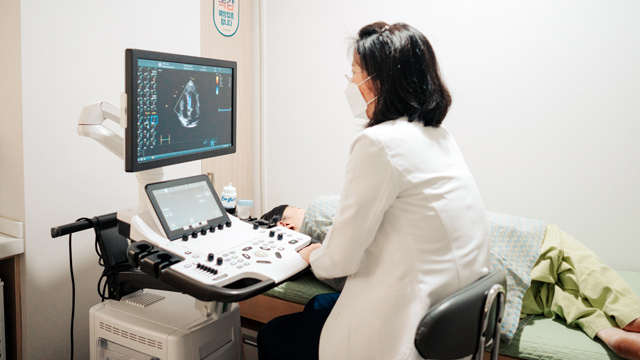
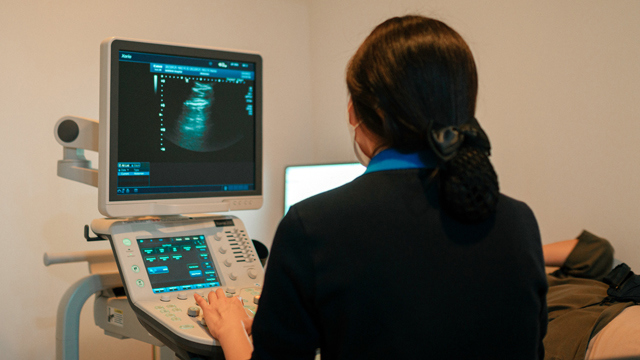
Ultrasound, while it does not provide images as detailed as MRI, offers a faster and lower-cost alternative that is especially valuable in two specific situations: producing real-time images to guide procedures, such as injection therapies where an accurate injection location matters for the treatment's effectiveness, and assessing organs such as the liver, kidney, gallbladder, pancreas, spleen, and thyroid as part of Internal Medicine's health screening services.
Because all three imaging modalities are available in-house, Narsha Hospital's Radiology department is able to support same-day imaging and same-day review, without the delays that can come from sending patients to an external imaging center and waiting for results to be transferred back. This also means radiologists can more easily collaborate directly with other departments, since imaging results are available within the same system used across the hospital, rather than needing to be requested, transferred, or reformatted from an outside provider.
Advanced Radiology & Diagnostic Imaging at Narsha Hospital for Expert, Patient-Focused Care
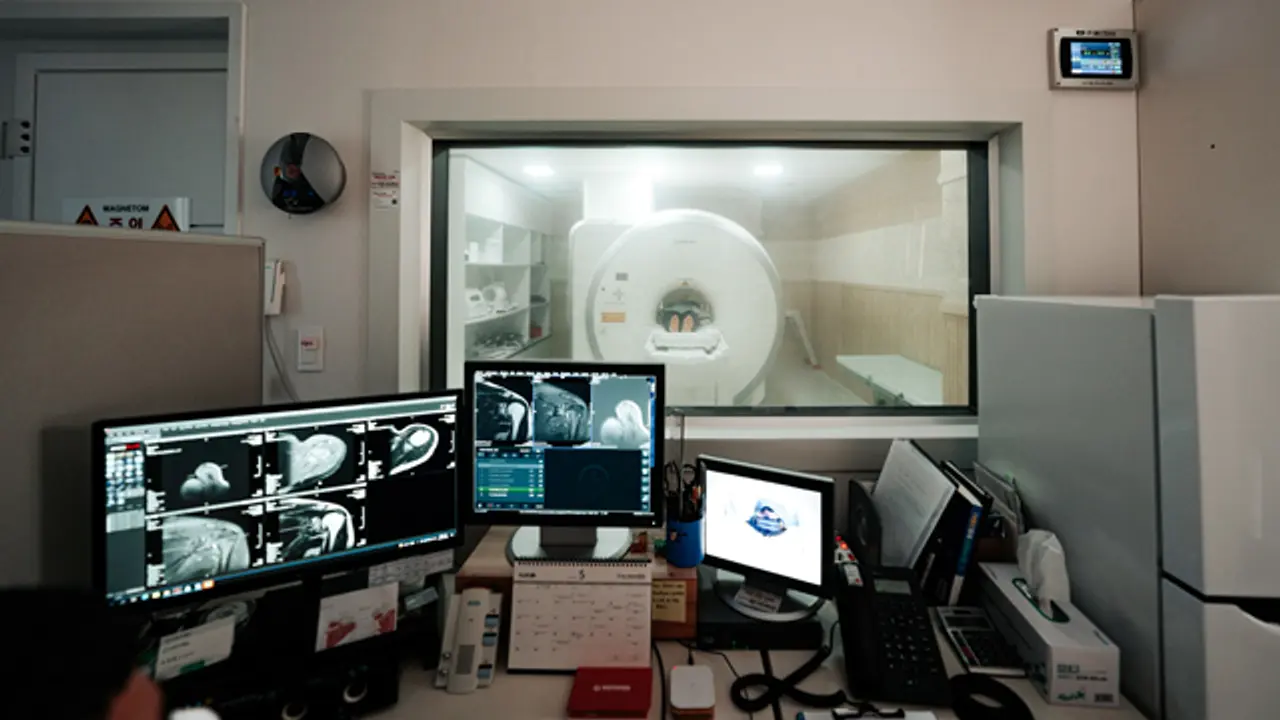
Waiting for imaging results can be one of the more stressful parts of any diagnostic process, particularly when a patient is dealing with pain, discomfort, or an unclear symptom that hasn't yet been explained. Being referred to a separate imaging facility, and then waiting for results to make their way back to the treating physician, can add both time and uncertainty to an already difficult experience — sometimes stretching a diagnosis out over multiple visits and multiple locations.
Patients do not need to manage this added wait. At Narsha Hospital, In-house Imaging means X-ray, MRI, and ultrasound scans are performed on-site, allowing radiologists and treating specialists to review results without unnecessary delay. This is especially valuable when imaging plays a direct role in a treatment decision — for example, when orthopedic surgeons need MRI results to determine whether a shoulder or elbow condition requires surgical treatment, or when ultrasound guidance is needed to perform an injection accurately at the correct location. In both cases, having the imaging and the treating specialist under the same roof shortens the distance between a question and its answer.
The goal throughout is to make the diagnostic process as efficient, comfortable, and clear as possible for every patient, so that the imaging step of a diagnosis feels like a natural, well-coordinated part of the overall care journey rather than a separate errand.
Specialty Services & Treatments for Radiology & Diagnostic Imaging at Narsha Hospital
Narsha Hospital's Radiology department provides the following core service:
In-house Imaging (X-ray, MRI, Ultrasound) — comprehensive on-site imaging covering three complementary modalities, each suited to different diagnostic needs
Within this service, imaging is applied according to clinical need:X-ray — used for an initial assessment of bones, joints, and, where relevant, the chest, helping identify suspected conditions before further imaging is considered
MRI — used when more detailed internal imaging is needed, particularly for evaluating soft tissue, tendon, and ligament conditions that X-ray cannot capture
Ultrasound — used for faster, lower-cost imaging, as well as for guiding injection therapies with precise needle placement, and for evaluating abdominal and thyroid organs as part of health screening
These three modalities are not used in isolation from one another; rather, they are applied in sequence or combination depending on what a patient's presenting symptoms suggest. A patient may begin with an X-ray, and only proceed to MRI if the X-ray does not provide a clear enough answer, or may have an ultrasound scheduled specifically because a treating physician needs precise imaging guidance for an upcoming injection.
Narsha Hospital is a strong choice for Radiology & Diagnostic Imaging because all three imaging modalities are available directly on-site, allowing radiologists to work in close, timely coordination with Orthopedic Surgery and Internal Medicine whenever imaging findings inform a treatment decision, rather than functioning as a separate, disconnected service.
Why Choose Narsha Hospital for Radiology & Diagnostic Imaging
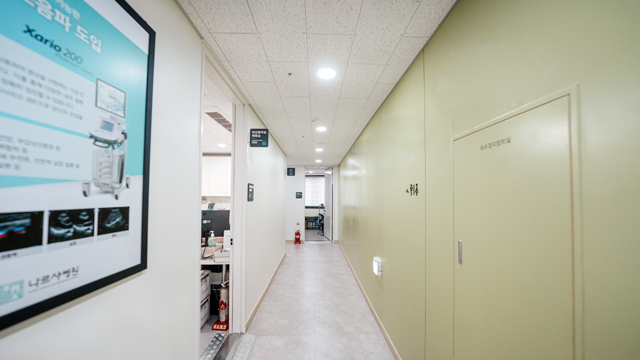
- Fully In-House Imaging — X-ray, MRI, and Ultrasound are all performed on-site, removing the need for outside referral and the delays that come with it
- Direct Collaboration with Orthopedic Surgery — radiologists and orthopedic surgeons review X-rays and MRI scans together to determine whether surgical treatment is needed, supporting faster, more coordinated treatment decisions
- Ultrasound-Guided Precision — ultrasound imaging supports accurate needle placement for injection therapies, where the precise location of the injection matters for the treatment's effectiveness
- Support Across Multiple Departments — in addition to orthopedic imaging, Radiology supports Internal Medicine's health screening services, including chest X-ray and abdominal and thyroid ultrasound
- Experienced Radiology Specialist — imaging is reviewed by a radiologist with focused clinical experience across multiple hospital settings, including specific expertise in musculoskeletal radiology
- Efficient, Same-Visit Diagnostic Process — because imaging is performed in-house, results can often be reviewed within the same visit, supporting faster overall care rather than a multi-visit diagnostic process
- Consistent Image Quality and Interpretation — with imaging centralized under one department, patients benefit from consistent equipment and a single radiologist's continuity of review across different scans and visits
Since its founding in 2018, Narsha Hospital has served approximately 45,000 patient visits per year, with In-house Imaging forming a core diagnostic resource supporting nearly every specialty across the hospital, from orthopedic surgery to internal medicine health screenings.
Meet the Specialist in Radiology & Diagnostic Imaging
 |
|---|
| Dr. Kim Bongjae, M.D.Radiologist |
Dr. Kim Bongjae earned his medical degree from the College of Medicine at Inje University and completed his residency at Inje University Ilsan Paik Hospital, later serving as a professor at Bundang Seoul National University Hospital. His clinical experience includes radiology positions at Seoul Bumin Hospital, Seoul Star Hospital, Busan Sebarun Hospital, and Yangsan Bonebarun Hospital, giving him a broad base of experience across different hospital settings and patient populations.
Dr. Kim is a member of The Korean Society of Radiology and the Korean Society of Musculoskeletal Radiology, reflecting a clinical focus that aligns closely with Narsha Hospital's emphasis on musculoskeletal imaging for shoulder and elbow conditions, alongside his broader experience supporting Internal Medicine's imaging and screening needs, such as chest X-ray and abdominal ultrasound.
Dr. Kim's approach centers on providing accurate, timely image interpretation that treating physicians across departments can rely on to make informed treatment decisions — whether that means confirming a diagnosis for orthopedic surgery, supporting a health screening finding for Internal Medicine, or guiding a procedure in real time through ultrasound. This cross-departmental role reflects how central diagnostic imaging is to nearly every stage of care at Narsha Hospital, from the first suspected diagnosis through ongoing monitoring.
Real Patient Journeys for Radiology & Diagnostic Imaging
Case Example 1: MRI Supporting a Surgical Decision
A patient with persistent shoulder pain had already undergone X-ray and physical examination without a clear diagnosis. Dr. Kim Bongjae performed an MRI scan, which provided detailed imaging that helped confirm the underlying condition. This information was reviewed together with the orthopedic surgical team, supporting a clear, collaborative decision about the appropriate next step in treatment, without the patient needing to wait for results from an outside imaging center.
Case Example 2: Ultrasound-Guided Injection Therapy
A patient requiring injection therapy for a joint condition needed precise needle placement to ensure the treatment would be effective. Using Ultrasound imaging, the treating team was able to visualize the exact injection site in real time, supporting accurate placement during the procedure and helping the patient avoid the discomfort of a less precisely guided injection.
These examples are illustrative of the general approach to diagnostic imaging at Narsha Hospital and do not represent guaranteed outcomes, as findings and treatment paths vary by individual condition.
International Patients & Global Support for Radiology & Diagnostic Imaging
Narsha Hospital welcomes international patients requiring Radiology & Diagnostic Imaging, supported by fully in-house imaging capabilities that allow scans and results to be completed efficiently, even for patients with limited time in the country.
Support for patients traveling for care includes:
- On-site availability of X-ray, MRI, and Ultrasound, avoiding the need for referral to an outside imaging facility and the added travel or delay that would involve
- Coordinated scheduling of imaging alongside related Orthopedic Surgery or Internal Medicine appointments within the same visit
- Timely result review between Radiology and the treating specialist, supporting faster overall diagnostic timelines for patients who may not be able to return for multiple follow-up visits
- Clear communication of imaging findings to support informed decision-making about next steps in treatment, whether the patient continues care at Narsha Hospital or returns home for follow-up
From initial imaging through specialist review, Narsha Hospital's coordinated care model is designed to support international patients through each stage of their diagnostic imaging visit, minimizing the uncertainty that can come with seeking care away from home.
What to Expect from Radiology & Diagnostic Imaging at Narsha Hospital
Step 1: Initial Imaging Based on Clinical Need
Depending on the reason for the visit, patients typically begin with an X-ray, providing an initial image relevant to the suspected condition, whether that involves a joint, bone, or the chest.
Step 2: Further Imaging If Necessary
If more detailed information is required, Dr. Kim Bongjae may recommend an MRI scan for in-depth internal imaging of soft tissue and joint structures, or an Ultrasound scan for faster, lower-cost imaging or for guiding a procedure such as an injection.
Step 3: Result Review and Coordination with the Treating Team
Once imaging is complete, results are reviewed by Dr. Kim Bongjae and shared directly with the relevant treating department — whether Orthopedic Surgery or Internal Medicine — supporting a coordinated, well-informed treatment decision without unnecessary delay between imaging and diagnosis.
Take the Next Step for Your Diagnostic Imaging Needs
Accurate diagnosis starts with clear, reliable imaging — and having X-ray, MRI, and ultrasound all available in one place can make that process faster, more comfortable, and more coordinated. Narsha Hospital's Radiology team is available to perform your imaging on-site and work directly with your treating specialist to support an informed, timely diagnosis from your very first visit.
To speak directly with Narsha Hospital's care team about Radiology & Diagnostic Imaging services, contact the appointment desk to arrange your imaging visit.
Related Services
Procedures available within our clinical departments.

Digestive Disorders
Digestive disorders encompass a wide range of conditions affecting the esophagus, stomach, duodenum, and colon, often producing symptoms such as abdominal discomfort, bloating, changes in bowel habits, or difficulty digesting food.
Learn More

Non-surgical Sports Treatment
Non-surgical sports treatment refers to conservative care for shoulder and elbow injuries sustained during athletic competition, training, or recreational sports activity, without the need for an operation.
Learn More

Shoulder Fracture
A shoulder fracture refers to a break in one of the bones that make up the shoulder girdle — most commonly the proximal humerus, but also the clavicle or scapula — typically resulting from a fall, direct impact, or high-energy trauma.
Learn More